


GNS ONLINE NEWS PORTAL
BY SAHIL HAMID
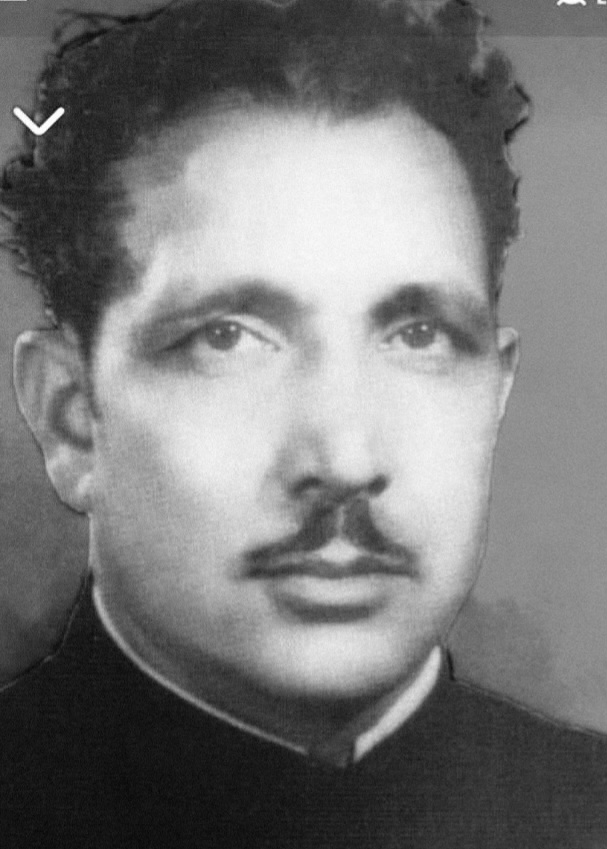
RAJOURI MAY 18:-Before attempting to write about such a towering personality, I must acknowledge my own limitations with humility. Neither do I possess the depth of scholarship nor the vast political understanding and experience required to fully capture the life and contribution of a personality who, in many ways, was an institution in himself. Writing about such a figure was never an easy task for me. Yet, despite these limitations, I have sincerely attempted to present his legacy with honesty and respect, hoping to do some measure of justice to a life devoted to principles, sacrifice, and public service.
The political history of Jammu & Kashmir has largely been narrated through a limited set of dominant personalities, while many regional leaders who played a crucial role in shaping democratic consciousness and resisting authoritarian structures remain insufficiently acknowledged in mainstream discourse. Among such figures, Abdul Aziz Shawl Sahib occupies a significant position. His contribution to political awakening, secular democratic values, and resistance against communal polarization represents an important chapter in the socio-political history of the Pir Panjal region during the pre-independence and post-partition period.
Remembered affectionately and respectfully by the people as “Baray Shawl Sahib,” he emerged during a period of intense political transformation in Jammu & Kashmir. The 1930s and 1940s witnessed growing public dissatisfaction against feudal oppression, political exclusion, and the absence of representative governance under the princely state. Simultaneously, democratic movements led by progressive political organizations were gradually mobilizing public opinion across different regions of the state. Within this broader political environment, Shawl Sahib developed as one of the prominent political voices advocating democratic rights, communal harmony, and social equality.
Born into a respected family known for public service and integrity, he developed political awareness at an early stage of his life. The reformist and democratic ideas articulated by Sheikh Abdullah significantly influenced his ideological orientation, particularly the emphasis on equality, representation, and political empowerment of marginalized communities. However, unlike many contemporaries who viewed politics primarily as a means of social mobility or personal advancement, he approached political participation as a moral and collective responsibility toward society.
His political credibility emerged not merely through organizational association, but through active public engagement and ideological clarity. By the late 1930s, he had established himself as an influential political worker in Rajouri and was appointed as the first Secretary of the Rajouri branch of the National Conference under Mir Ghulam Rasool. This appointment reflected both his growing influence among the masses and the trust placed in him by senior political leadership.
One of the most defining aspects of his political personality was his refusal to compromise on principles despite hostile circumstances. A notable example occurred in 1941 during a politically sensitive gathering marked by ideological realignments and changing political loyalties within the region. At a time when many preferred silence for strategic convenience, he openly questioned the contradictions and opportunism of leaders who had altered their political positions. His intervention generated tension within the gathering and eventually provoked a violent reaction from opposing groups. He was physically assaulted and sustained severe injuries, the marks of which reportedly remained visible throughout his life.
This incident is significant not merely as an episode of political violence, but as an illustration of the polarized political atmosphere of the time and his unwavering commitment to ideological consistency. Rather than discouraging him from political participation, the attack strengthened his public image as a leader willing to endure personal suffering for collective principles. Among ordinary people, this courage contributed substantially to his growing moral authority.
His role became even more prominent during the Quit Kashmir Movement of 1946, which represented one of the most important political mobilizations against autocratic rule in the princely state. During this movement, he actively participated in organizing rallies, mobilizing youth, disseminating political literature, and spreading democratic awareness in the Rajouri region. His speeches frequently challenged authoritarian structures and emphasized the necessity of representative governance and civil rights.
The administration perceived such activism as politically threatening. Consequently, he was arrested and publicly paraded through the streets in an attempt to weaken public morale and diminish his influence. However, historical accounts and local memory suggest that the strategy produced the opposite effect. Public sympathy and support for him increased considerably, and his arrest strengthened his symbolic position within the regional democratic movement.
The events of 1947 marked another critical phase in his public life. Partition generated unprecedented violence, displacement, and communal polarization across the Indian subcontinent. Border regions such as Rajouri experienced severe instability, resulting in large-scale human suffering and the breakdown of long-standing communal relations. During this period of extreme uncertainty, his political conduct reflected a remarkable commitment to secular and humanitarian values.
Instead of participating in communal mobilization, he consistently appealed for peace, coexistence, and social restraint. He emphasized the importance of preserving inter-community relations and discouraged retaliatory violence and hatred. His efforts to reduce tensions and protect civilians demonstrated a political outlook rooted not in sectarian interests, but in ethical responsibility toward society as a whole.
At the ideological level, his politics was fundamentally shaped by the belief that democracy could not survive without equality, justice, and communal harmony. He viewed social diversity as a collective strength rather than a political weakness. Consequently, he opposed divisive political narratives and consistently advocated educational advancement, social justice, and empowerment of marginalized communities.
Equally important was his personal integrity. His political life was characterized by repeated arrests, physical assaults, financial hardship, and political isolation. Nevertheless, he did not abandon his principles for convenience or political gain. This consistency contributed to the respect he commanded among ordinary people, many of whom continued to refer to him affectionately as “Baray Shawl Sahib,” reflecting not only admiration but also emotional closeness and public trust.
He passed away peacefully on 14th May 1991, but his departure did not mark the end of his influence. Even decades after his death, his memory continues to survive in public consciousness through stories of courage, sacrifice, and principled leadership narrated across generations. For many people, particularly in the Pir Panjal region, his life remains a reminder of a political culture rooted in ethics, dignity, and public accountability.
In contemporary political discourse, where ideological flexibility and political opportunism often dominate public life, the relevance of his legacy has increased significantly. His life offers an alternative model of leadership grounded in ethical conviction, public accountability, and democratic commitment. More importantly, it demonstrates that regional political actors can play a transformative role in shaping collective political consciousness even without occupying the highest formal positions of power.
The contribution of Shawl Sahib therefore deserves greater scholarly attention within the broader historiography of Jammu & Kashmir. His political journey reflects the intersection of regional activism, democratic resistance, secular politics, and public morality during one of the most volatile phases of South Asian history.
Ultimately, his legacy survives not because of institutional authority or political privilege, but because he represented a politics rooted in courage, sacrifice, and principled resistance. In a period marked by fear, violence, and uncertainty, he chose to stand firmly for justice, coexistence, and democratic values — and it is precisely this moral steadfastness that continues to preserve his memory across generations.

 Users Today : 57
 Users Yesterday : 140
 Users Last 7 days : 409
 Users Last 30 days : 409
 Users This Month : 409
 Users This Year : 409
 Total Users : 410
 Views Today : 76
 Views Yesterday : 201
 Views Last 7 days : 575
 Views Last 30 days : 575
 Views This Month : 575
 Views This Year : 575
 Total views : 576
 Who's Online : 0