


GNS ONLINE NEWS PORTAL
SAHIL HAMID RAJOURI J&K
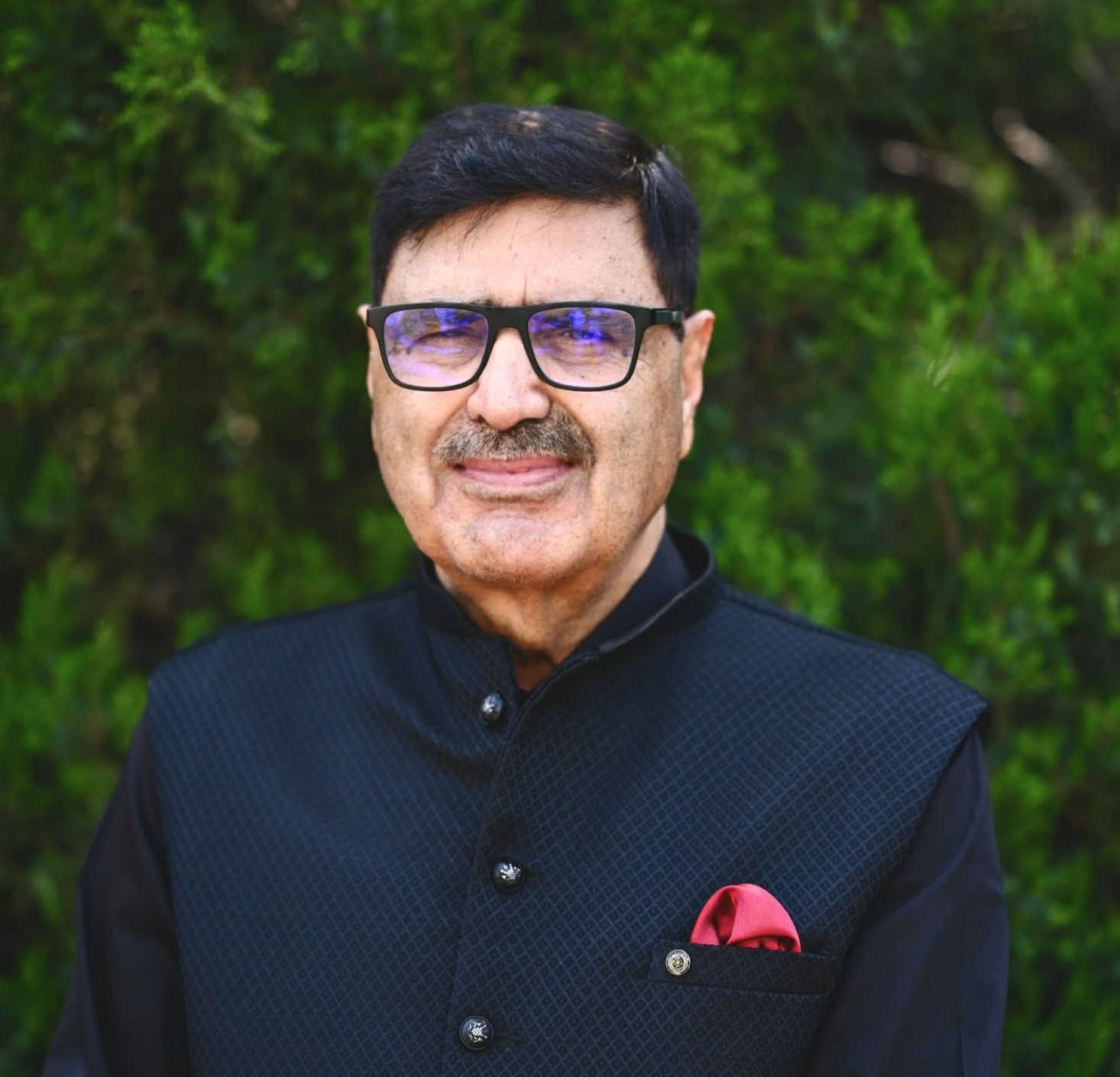
RAJOURI FEBRUARY 27:-In the evolving political landscape of Jammu and Kashmir, the journey of Mohd Iqbal Malik reflects administrative depth, political resilience, and sustained advocacy for marginalized communities. Hailing from the small village of Dodaj in Darhal tehsil of Rajouri district, he rose from modest beginnings to become one of the significant political figures of the Pir Panjal region. His life’s trajectory—spanning public administration and active politics—is marked not merely by electoral participation but by perseverance in challenging political terrains, particularly his advocacy for Scheduled Tribe (ST) status for the Pahari community.
Malik completed matriculation in 1963, Malik graduated from Government Degree College Poonch in 1967 and earned his LL.B. degree from Aligarh Muslim University in 1969
Educated at Government High School Darhal, where he completed matriculation in 1963, Malik graduated from Government Degree College Poonch in 1967 and earned his LL.B. degree from Aligarh Muslim University in 1969. He entered government service in the Department of Excise and Taxation and steadily advanced through the ranks, ultimately retiring in 2004 as Special Secretary to the Government (K.A.S). His administrative career was characterized by procedural integrity, financial oversight, and institutional discipline—qualities that later shaped his political style.
After retirement, he entered active politics in 2004, initially joining the People’s Democratic Party (PDP). In 2008, he contested the Assembly elections as an Independent candidate and secured 15,000 votes, closely trailing the winner. In 2009, he joined the Indian National Congress (INC) and contested the 2014 Assembly elections, polling 19,000 votes against 23,000 secured by the winning candidate. These results demonstrated a consistent electoral base and growing recognition in Rajouri district.
A major political shift occurred in 2019 when he joined the Bharatiya Janata Party (BJP). In the socio-political context of the Pir Panjal region—where demographic composition and political narratives are deeply intertwined—this move was widely seen as bold. The real test of this decision came in the 2020 District Development Council (DDC) elections.
Contesting from the Darhal Territorial Constituency, a 100 percent Muslim-majority region, on a BJP mandate posed a formidable challenge. The electoral environment was sensitive, influenced by entrenched political loyalties and ideological perceptions. Securing public trust under such circumstances required more than party affiliation; it demanded credibility built over decades.
Malik confronted this challenge through sustained grassroots outreach, issue-based campaigning, and direct engagement with voters
Iqbal Malik confronted this challenge through sustained grassroots outreach, issue-based campaigning, and direct engagement with voters. He focused on development, governance experience, and local accountability rather than polarizing rhetoric. His administrative background and long-standing accessibility in the region helped him transcend conventional political divides. Ultimately, he secured victory with an absolute majority.
This victory carried structural and symbolic importance. It demonstrated that electoral success in the Pir Panjal belt could be anchored in personal credibility and developmental commitment, even when prevailing narratives suggested otherwise. Winning a Muslim-majority constituency on a BJP mandate required navigating skepticism, countering assumptions, and building cross-sectional confidence—an achievement that significantly enhanced his political standing.
His performance in the 2024 Assembly elections further reinforced this trajectory. Contesting again on a BJP ticket, he secured 27,000 votes and finished second. The increased vote share reflected consolidation of support and indicated that his earlier DDC victory was not incidental but part of a sustained political presence.
Parallel to his electoral journey, Mohd Iqbal Malik’s most enduring contribution remains his advocacy for the Pahari community. For decades, the Pahari ethnic group
Parallel to his electoral journey, Mohd Iqbal Malik’s most enduring contribution remains his advocacy for the Pahari community. For decades, the Pahari ethnic group sought Scheduled Tribe status to address structural disadvantages in education, employment, and representation. Malik consistently supported this cause, articulating the socio-economic realities of the community in political and policy discussions. His engagement involved mobilizing community support, maintaining dialogue with decision-makers, and emphasizing measurable backwardness indicators.
The grant of Scheduled Tribe status to the Pahari community marked a transformative development in the region’s socio-political history. While the achievement was collective in nature, Malik’s sustained political advocacy positioned him among the prominent leaders associated with the movement. The decision expanded opportunities in education, public employment, and institutional participation for the Pahari youth, reshaping their long-term prospects.
Currently serving as a Member of the J&K UT Wildlife Board and as a Member of the Working Committee of BJP J&K, he remains actively engaged in regional political affairs across Rajouri and Poonch districts. His continued outreach has influenced evolving political alignments in the Pir Panjal region.
His sustained advocacy for ST status for the Pahari community links his political career to a structural policy
From civil service to electoral politics, Mohd Iqbal Malik’s public life reflects continuity in commitment and adaptability in strategy. His 2020 DDC victory in Darhal under challenging demographic and political circumstances demonstrated that electoral equations can shift when leadership credibility intersects with grassroots trust. His competitive presence in subsequent Assembly elections further established him as a central political figure in the region. Above all, his sustained advocacy for ST status for the Pahari community links his political career to a structural policy transformation whose impact will extend well beyond electoral cycles, shaping the socio-economic trajectory of the Pir Panjal region for years to come.





 Users Today : 397
 Users Yesterday : 306