


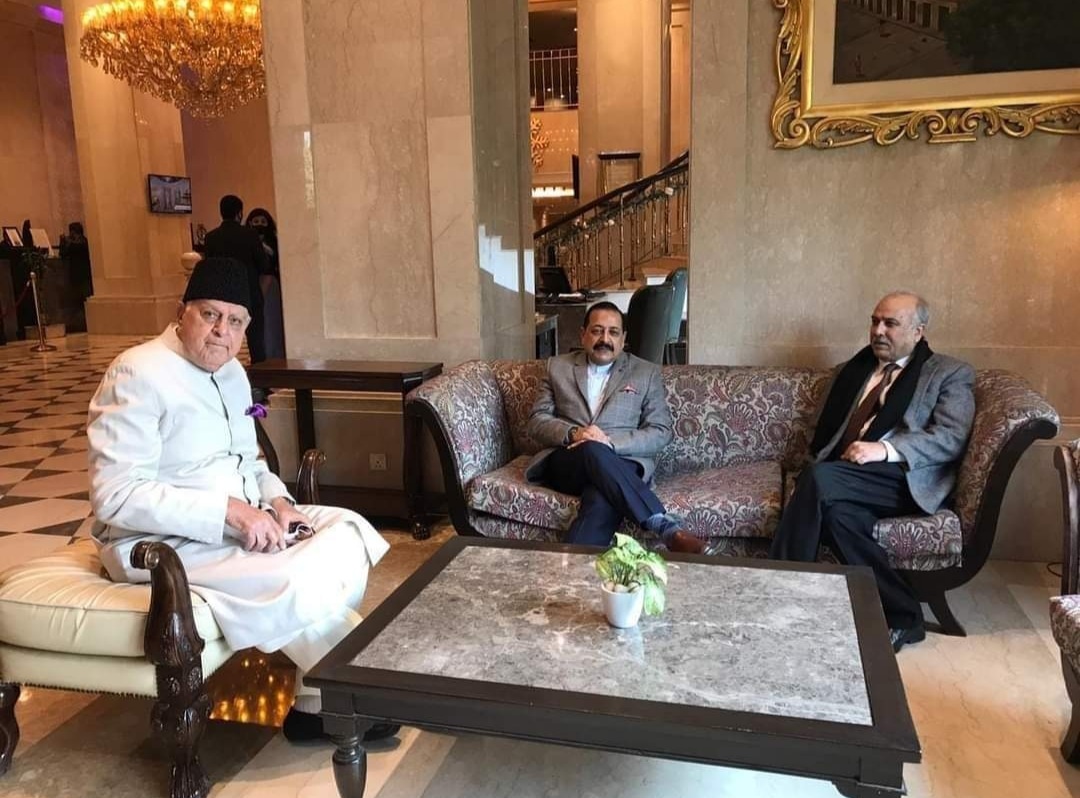
New Delhi, December 26: The controversial proposed allocation of seats in the new legislative assembly of the union territory of Jammu and Kashmir, presented earlier this week by the Delimitation Commission, has much more than what meets the eye as the key political player National Conference has come under scanner for hiding what transpired in the meeting.
The Commission is said to have shared the draft report with the Associate Members comprising two Member Parliament of ruling Bhartiya Janta Party and three from National Conference.
The Commission through its official handout, issued immediately after the meeting, disclosed that it has proposed increase of six seats for Jammu region and one for Kashmir on the basis of various parameters it has adopted while deviating from the sole yardstick of population.
Sources disclosed that the Commission has shared all other details with the Associate Members beyound the official handout “but the National Conference chose to remain silent” on these suggestions.
“Draft proposal is the proposal itself which has to be brought in public domain. It is not the one liner as released by the Commission in the official handout”, sources claimed adding, “Interestingly NC immediately after the meeting participated in another deliberation on the issue with PAGD on the very next day. But the information was not shared with other alliance members as well”, they said.
It was reliably learnt that draft proposal explains in detail the boundaries and number of electorates of each constituency proposed by the commission. “This is the draft on which the Associate Members have been asked to file objections before Jan 31”.
The Commission is headed by Justice (Retd.) Ranjana Prakash Desai, who served at the Supreme Court, and consists of the Chief Election Commissioner and the Jammu and Kashmir election commissioner as ex-officio members, as well as five Members of Parliament (MP) as associate members – three from the Jammu & Kashmir National Conference (NC), and two from the Bharatiya Janata Party (BJP).
The associate members have been given time till the end of this month to submit their suggestions on the draft proposal to the commission. After their suggestions are incorporated, the updated proposal will be placed in the public domain to invite feedback from the public. After considering this feedback, the final delimitation plan will be published in March next year.
If the draft proposal goes through in its current form, the effective number of seats in the new legislative assembly for the union territory of Jammu and Kashmir will stand at 90 – with the Kashmir region having 47 seats, up from 46, and the Jammu region having 43 seats, up from 37. The legislative assembly of the erstwhile state of Jammu and Kashmir had 107 seats, out of which 24 were in Pakistan-occupied Kashmir and therefore unrepresented.
Though National Conference has outrightly rejected the recommendations and even threatened to move to SC, observers believe that its non disclosure of all the details of the proposal has much more meaning than its public posturing. “If NC members are sitting over the entire draft and not sharing it even within the party circles, inferences can be drawn that the party is more focous Ed on strengthening its base and winning elections rather than upsetting the key players in Power circles”.





 Users Today : 24
 Users Yesterday : 125