GNS ONLINE NEWS PORTAL
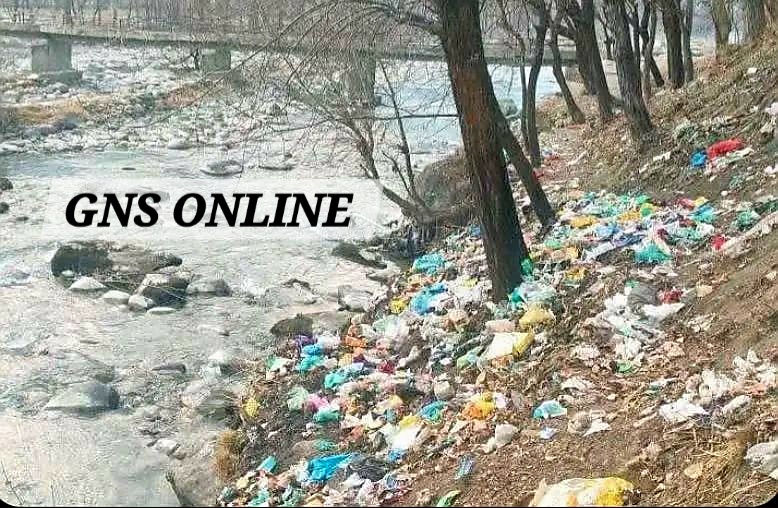
SRINAGAR–KANGAN, JAN,07:Raising serious concern over rampant plastic pollution along Sindh Nallah in Kangan, noted environmentalist and social activist Syed Farhat on Tuesday termed the situation a systemic collapse of Solid Waste Management (SWM) and governance, demanding transparency and accountability from the concerned authorities.
Sindh Nallah, a vital water body and lifeline for the region, has allegedly been turned into an open dumping site, with heaps of plastic waste lining its banks. Farhat warned that the unchecked dumping poses a grave threat to water quality, aquatic life, public health, and flood safety—especially during rainfall, when plastic waste is washed downstream.
“This is not accidental pollution; it reflects administrative failure and misuse of public funds,” Farhat said. “If proper waste management systems were in place, a riverbank would not be choking under plastic.”
Questioning the implementation of the Swachh Bharat Mission (SBM) and Solid Waste Management Rules, Farhat raised several public-interest concerns, including the failure of SWM on the ground despite repeated official claims, the absence of infrastructure for waste segregation and scientific disposal, and the utilisation of SBM funds sanctioned for cleanliness, monitoring, and waste processing.
He also questioned why open dumping sites continue to exist despite allocations for scientific landfills and processing units, and why citizens face penalties while officials responsible for negligence escape accountability.
“Public money is meant to safeguard public health and the environment—not to fund photo-op campaigns while rivers are poisoned,” he said, adding that honest and transparent utilisation of funds could have prevented the present crisis at Sindh Nallah.
Calling the situation a betrayal of public trust, Farhat urged immediate intervention by municipal bodies, the Rural Development Department, the Pollution Control Board, and the District Administration.
Among his key demands are public disclosure of SBM funds received and expenditure details, a clear explanation for the absence of effective waste management systems, and fixing responsibility for environmental damage and administrative negligence.
Farhat warned that environmental destruction driven by corruption and incompetence is a “silent crime,” the consequences of which are borne by common citizens through floods, disease outbreaks, and contaminated water sources.
“Cleanliness cannot remain a slogan. Transparency, accountability, and concrete action are non-negotiable,” he asserted.











 Users Today : 323
 Users Yesterday : 165