GNS ONLINE NEWS PORTAL
ZAHID SHAH
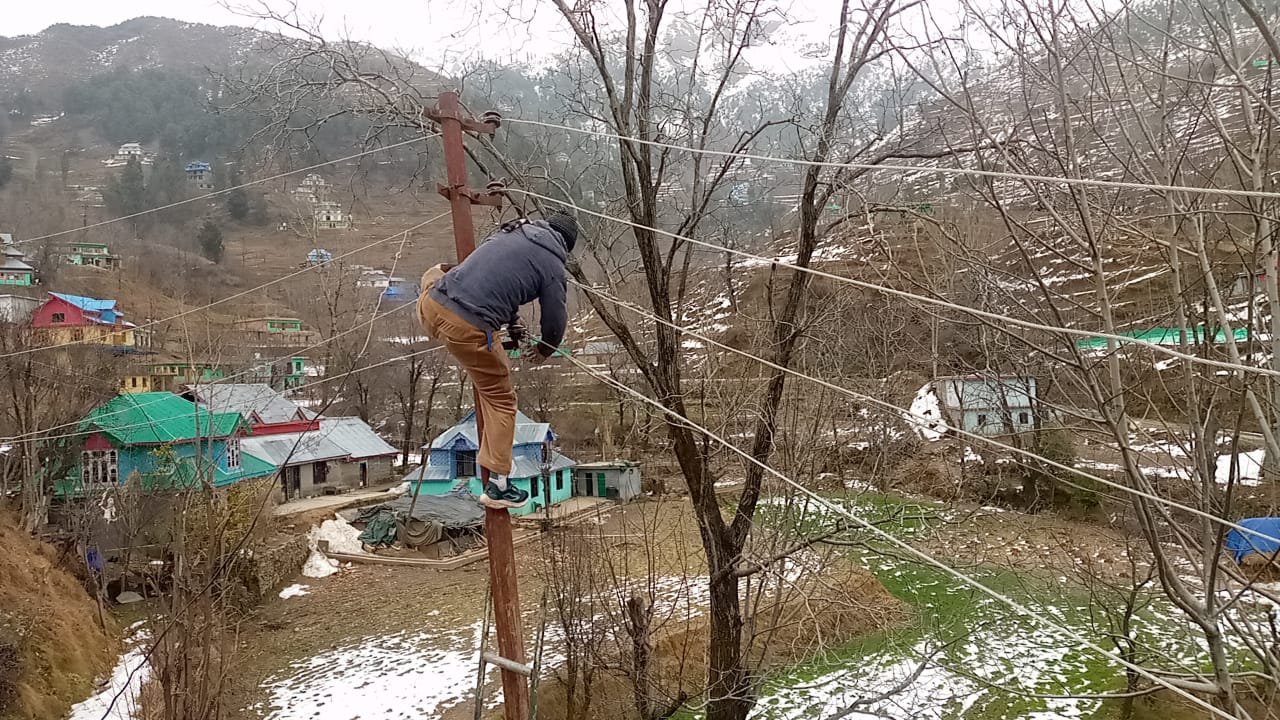
RAJOURI FEBRUARY 01:-In the hilly and remote areas of Rajouri district, daily-wage employees of the Power Department continue to risk their lives to ensure uninterrupted electricity supply, often working under extremely dangerous conditions without basic safety equipment.
These workers routinely climb tall electric poles and handle live wires amid harsh weather, including heavy rainfall, snowfall, landslides, and treacherous mountain terrain. Shockingly, most of them are deployed without essential protective gear such as safety helmets, insulating gloves, safety harnesses, or electrically insulated footwear—turning every assignment into a life-threatening ordeal.
Over the past few years, several tragic incidents have been reported in the district, where power department workers lost their lives or suffered permanent disabilities while on duty. In many cases, families of the victims—wives and children—have been left to face poverty, hunger, and uncertainty, with little institutional support beyond routine condolences.
Despite the recurring accidents, there appears to be no serious or sustained effort by the Power Department or the government to address the issue at its root. Official responses following such incidents have largely been limited to formal statements, with no visible long-term safety policy or accountability mechanism put in place.
Experts and locals point out that in developed countries, providing complete protective gear, modern tools, and proper safety training to electrical linemen is considered a fundamental responsibility of the state. Allowing workers to handle live electricity without safety equipment is treated as a serious violation. In contrast, the situation in Rajouri reflects a disturbing administrative apathy toward human life.
The prevailing conditions underline an urgent need for immediate intervention. Daily-wage power employees must be provided with standard safety equipment without delay, and strict instructions should be issued to prohibit work on electric lines in the absence of proper protective gear.
Ensuring the safety of those who illuminate homes in the most difficult terrains is not just an administrative duty—it is a moral imperative.










 Users Today : 398
 Users Yesterday : 197