GNS ONLINE NEWS PORTAL
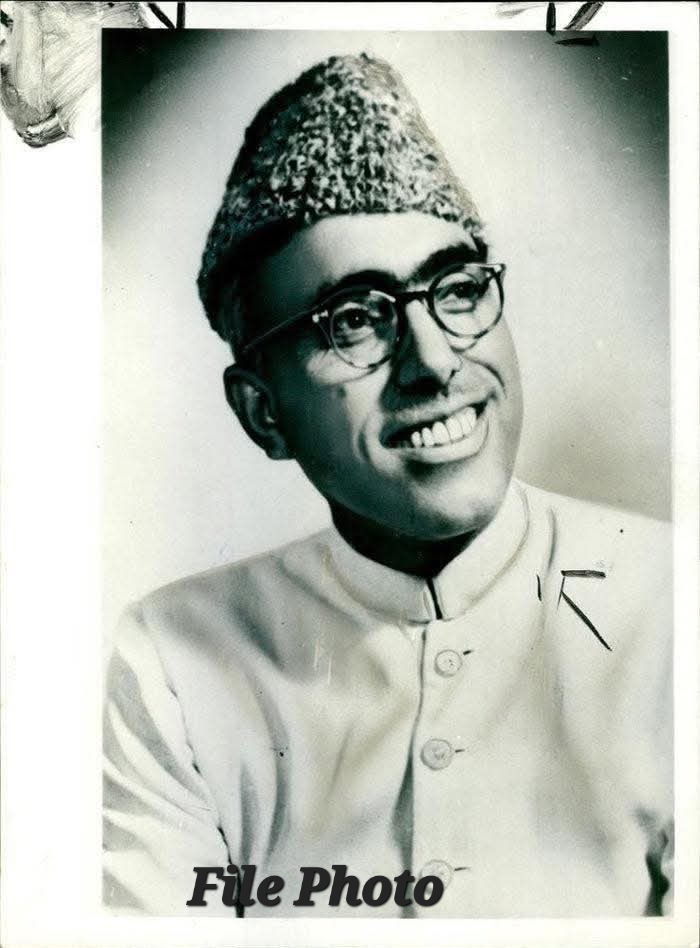
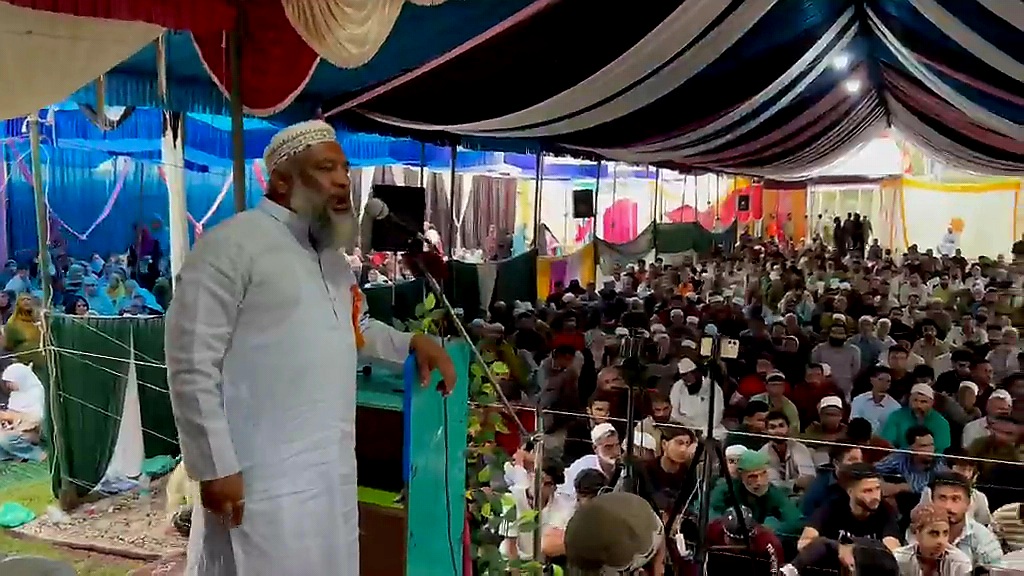
SRINAGAR DECEMBER 07:Senior political leader and former separatist ideologue Qasim Fakhtoo has sharply criticised Sheikh Muhammad Abdullah, alleging that the Kashmiri leader “organised two major political movements in his lifetime and ultimately used both as stepping stones to secure power for himself.”
According to Fakhtoo, Sheikh Abdullah’s political journey reveals “a pattern of mobilising mass sentiment only to later compromise on the very causes he championed.”
He argued that from 1932 to 1947, Sheikh Abdullah led the anti-Dogra movement, projecting himself as the voice of Kashmiri Muslims against autocratic rule. “But in 1947, the same Sheikh Abdullah took charge as Emergency Administrator and began working alongside the Dogra administration he had opposed for 15 years,” Fakhtoo alleged.
Similarly, from 1953 to 1975, Sheikh spearheaded the Plebiscite Movement, only to sign the 1975 Indira–Sheikh Accord, return as Chief Minister, and “abandon the very demand for which thousands of people had struggled and sacrificed.” According to Fakhtoo, “the sacrifices of an entire generation were bartered away for personal political rehabilitation.”
Fakhtoo also contended that Sheikh Abdullah’s political choices were shaped by ideological inclination rather than Islamic scholarship. “Had he reflected on the Quran or on the writings of Sheikh Ahmad Sirhindi, Shah Waliullah and Sir Syed Ahmad Khan, he would never have embraced the composite nationalism of the Indian National Congress over the Two-Nation Theory,” he claimed. He recalled that in 1944, Muhammad Ali Jinnah had warned Sheikh Abdullah that the Congress leadership was “not trustworthy,” but “Sheikh paid no heed.”
The separatist leader went further, asserting that Sheikh Abdullah bore more responsibility than Maharaja Hari Singh for “facilitating India’s control over Jammu and Kashmir.” Fakhtoo argued that in October 1947, when Hari Singh had fled Kashmir, “real power actually rested with National Conference volunteers led by Sheikh Abdullah.” Therefore, he claimed, “if Sheikh had refused to accept the accession signed by the Maharaja, it would have carried little constitutional weight.”
According to Fakhtoo, Sheikh Abdullah’s release from the Bhaderwah sub-jail came only after negotiations with Deputy Prime Minister Ram Lal Batra and on the “basic condition of handing political space in Kashmir to India.” This, he said, was “an anti-Kashmir decision that sowed the seeds of Indo-Pak conflict and opened the door to decades of repression against Muslims of Jammu and Kashmir.”
He further stated that when Sheikh Abdullah was dismissed and arrested by Prime Minister Jawaharlal Nehru in 1953 for opposing moves to dilute the state’s autonomy, it should have been a moment of introspection. “Yet, instead of acknowledging his political misjudgments, Sheikh Abdullah repeated history in 1975 by again surrendering the people’s cause to regain power,” Fakhtoo said.
He added that Sheikh Abdullah was aware that aligning with India would “perpetually subdue Kashmiri Muslims under non-Muslim domination,” but he still remained driven by personal ambition. “He could not support Hari Singh or Ram Chand Kak’s efforts to maintain independence, because that would have deprived him of power. And he could not support accession to Pakistan, because Pakistan would have preferred Maulana Yousuf Shah or Chaudhry Abbas over him. Therefore, he made a calculated choice to side with India.”
In conclusion, Fakhtoo said that the very power Sheikh Abdullah “secured by sacrificing the political aspirations of his people” was taken away from him twice—first in 1953 and finally in 1982. What remains “astonishing,” he said, is that “pro-India politicians in Kashmir have failed to draw lessons from the failed political trajectory of Sheikh Abdullah.”
Copy paste from social media










 Users Today : 31
 Users Yesterday : 150